Tuesday, February 24, 2009

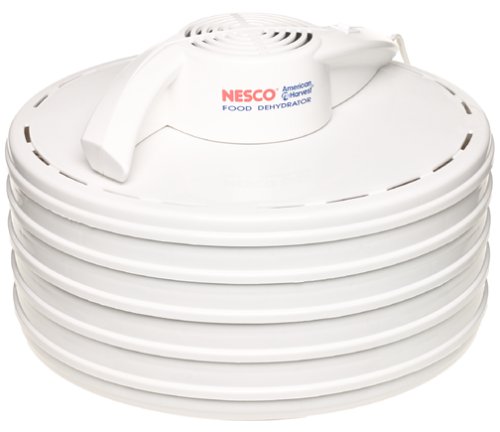
Nesco American Harvest 5-Tray FD-35 425-Watt Snackmaster Dehydrator

This unit features Nesco/American Harvest's innovative Top Mounted Powerhead that dries food quickly and evenly with superior results. Detaches to make dehydrator dishwasher safe for easy clean up. Fan-Flow Technology means faster, more even drying with no tray rotation necessary. Perfect for the beginner.


When you think Hawaii, you may think of tropical. And when you think tropical, you think of pineapple. But that is just one of the many tastes associated with the Pacific Island state. Hawaii is really a melting pot of a state and a melting pot of cultures; much of their food has a blend of flavors.

When it comes to a beef jerky recipe with a Hawaiian flair, it's no wonder then that there are a variety of flavors that will create a luau inside anyone's mouth!

Below is a recipe for Hawaiian beef jerky. This recipe, as mentioned above contains several different flavor bursts. There is some ginger for spice. Some brown sugar for sweetness. Some pepper and Cayenne pepper for a little fire. Some soy sauce for saltiness. And we can't forget that pineapple.

Ingredients:

1 lb lean meat, thinly sliced

1 tsp salt

1 tsp ground ginger

1 tbsp brown sugar

1/4 tsp pepper

1/8 tsp cayenne pepper

1 crushed garlic clove

1/4 c pineapple juice

1/4 c soy sauce

Directions:

1. Slice meat in thin strips.

2. In a bowl, combine all ingredients of marinade and mix well.

3. Place meat 3-4 layers deep in a container, spooning sauce mixture over each layer.

4. Cover tightly and marinate 6-12 hours in the refrigerator, stirring occasionally.

5. Layout on trays, 24 to 36 hours in dehydrator (or follow directions for oven).

Now all you need is a grass skirt and some coconut milk!

REVIEW: Not sure if you can make your own?

Analei V. of Salem always wanted to go to Hawaii. At least she got a taste of Hawaiian beef jerky when she tried a piece of her friend's Holston Mountain Hawaiian Beef Jerky. The website said that the jerky is sweeter than its other flavors. Analei agreed saying, "There was a real hint of pineapple, which was an interesting combination for beef. I am so used to pineapple being on ham. This was a very unique jerky. I didn't even know you could have fruity jerky! The piece of jerky was huge, too. I am used to thin sticks, but this was an enormous piece. A little hard to chew." The Holston Mountain Hawaiian Jerky is available on their website in three sizes from $8-$21.

If you found this information on hawaiian beef jerky useful, you'll want to read this article about beef jerky seasoning salt.

dehydrator

Monday, February 16, 2009

Trail Food: Drying and Cooking Food for Backpacking and Paddling

PCKT GD WILDRNESS MED & 1STAID


    Brie Cheese is quite unusual and it comes from France where it got its namesake. The French still make Brie Cheese the same way today as they did in the 18th century. Both the commoners and the royalty of that era enjoyed the taste of Brie Cheese. It was always in demand for the ceremonies to offer tribute to the Royals of France.

    Outside of France Brie Cheese is make in larger factories where the process is significantly industrialized and sped up. While the try hard to get the very same taste many cheese coniseurs claim you can definitely tell the difference in Brie Cheese that is made in France and that which is made in other places.

    To make Brie Cheese, the curds are processed after they are firm. They are injected with a vaccination called a mold infusion. This mold will grow over a couple of weeks and this is where the taste of the Brie Cheese starts to change. The mold grows on the outside of the cheese and preserves the delicious taste inside of it. The white exterior of Brie Cheese has made it quite famous in many parts of the world.

    Brie Cheese is commonly sold in one or two kilogram wheels. Some retailers will sell it in smaller wedges as a courteously to customers. There are several varieties of Brie Cheese including plain, herb, and others with combinations of milk products.

    It is made from cow's milk but many people are hesitant to try it because of the grayish color it has. Brie Cheese has a very soft and smooth texture to it. It has a rind on it that doesn't taste like anything. It is actually a white mold that you can eat without getting sick but since it has no flavor many people pass it up.

    Many people say Brie Cheese tastes very similar to wild mushrooms. For the best taste Brie Cheese should be allowed to sit at room temperature for an hour before serving. It is often served with berries, nuts, salads, and on hamburgers.

    If you found this information on Brie Cheese useful, you'll also want to read about Goat Cheese

    dehydrator

    Wednesday, February 4, 2009

    Trail Food: Drying and Cooking Food for Backpacking and Paddling

    PCKT GD WILDRNESS MED & 1STAID


      Drying or dehydrating vegetables is one of the oldest known methods of food preservation. The really great thing about it is that you can do it at home with equipment you have on hand.

      You should pick your produce at it's peak and work as quickly as you can to preserve its colour and taste.

      Prepare your vegetables as if you were going to serve them. Wash them well, trim, cut, chop, slice, whatever. Thickness will play an important role in how long your veggies take to dehydrate, so bear that in mind when preparing.

      Next you must blanch the vegetables. This will preserve the colour and flavour of the vegetable. Most vegetables have an enzyme that, left active, is what makes it spoil so quickly. Blanching the vegetables stops the enzyme action.

      Follow available guidelines for blanching (available at www.no-dig-vegetablegarden.com). Once blanched, chilled and drained, you are ready to dry or dehydrate your vegetables for long
      term storage.

      The Rules

      Of course, there are heaps of rules...but let's start here.

      There are three methods used to dry or dehydrate vegetables.
      Sun dried, commercial dehydrator or oven.

      Sun drying is the least reliable method for areas with variable temperatures. Unless you live in a climate that is a consistent 90F with low humidity for a guaranteed 3 days in a row, you risk your produce.

      Once the drying starts, it cannot stop until finished. So DO NOT let your vegetables cool again until they're done. Having said that, lots of places do have that sort of weather...but more places don't, so sun drying is a bit of a gamble for most.

      You can purchase food dehydraters in a range of sizes, but unless you are going to be doing an awful lot of this, it's probably better to wait or buy one with a group of friends to pass around. They aren't very expensive, but they are usually used for quite short periods of time.

      So, we're left with the oven. It's almost certain that you have one, so nothing new to buy. It is time consuming and a little fiddly, but it's such a great result!

      Oven drying

      A home oven will only dry small quantities at a time (up to six pounds of produce, depending on the number of racks you have) so don't be preparing bushells of veggies at a time!

      Set the oven at the lowest temperature and preheat to 140F (60C). If you are uncertain of the temperature, put a separate oven thermometer on a rack you can see. Check your temperature
      every half hour or so.

      Lay out your vegetables on stainless steel screen mesh or wooden
      frames covered in cheescloth. Do NOT use cookie sheets as the
      air must circulate around the food. Having the food sit next to
      metal sheets may also transfer a metalic taste. Using other
      types of metal materials may react with the food so please don't.

      Load up the veggies. Doing trays of items similar in size will keep the drying even. For instance, doing pumpkin, carrot and
      potato might be a good mix. Try not to mix strong flavoured items as the flavour may transfer from one vegetable to another.

      Keep the oven door open about 3 inches or so during drying. It is vital that the temperature is maintained at 140F (60C) and that the moist air can escape. Move the trays around frequently to ensure even drying. No oven has even heat throughout.

      Keep a close eye on your drying vegetables. Don't let them scorch and keep them moving.

      Depending on the vegetable you are drying it will take between
      4 and 12 hours to dry. Once they're done, the vegetable pieces
      will be hard and should shatter if hit with an instrument.

      Store in a water tight container. To use, just add them to soups and sauces as they are, or reconstitute (cover them in a container with water 2:1 ratio) for approximately 2 hours before using.

      Judy Williams (http://www.no-dig-vegetablegarden.com) splits her time between being an executive and an earth mother goddess.

      No Dig Vegetable Gardens represents a clean, green way to grow your own food. The site covers all aspects of growing, cooking and preserving your harvest.

      dehydrator

      Grilling Tools For the Backyard BBQ Master

      If you want to make a name for yourself as the local neighborhood grill master, you need to have the right tools and accessories. These grilling tools are a must have for backyard chefs everywhere:

      You'll need a nice set of utensils that are well suited for grilling. That means they shouldn't be made of material that will get hot in your hands. They should be big enough that you can reach the back of the grill with them safely, but no bigger. Many bbq tools are made so big that they become difficult to handle. Many a time I've seen a newbie griller use extra long tongs to grab something off the grill only to lose control and drop it on the ground. What a waste!

      Another note about barbeque utensil sets: they usually come with a giant fork. Take the fork and throw it right in the garbage. No self-respecting grill master uses a fork to poke his meat. It lets all the delicious juices pour out!

      Now what other grilling tools do we need? Well, you need to keep your grill clean so that means you'll need a wire brush. You can get these for as little as $5.99 but I recommend going with the $14.99 models. The cheaper ones fall apart and leave little pieces of their wire all over your grill (and in your food if you're not careful). Better to spend the extra couple bucks and avoid the aggravation.

      Now let's think about safety. You're going to be working over an open fire so you want to be as careful as possible. The grill will be piping hot and so will dishes, utensils, etc. At the least you should have some sturdy oven mitts handy. But what I recommend is getting a pair of "Ove Gloves". You can get them for around $12 to $15 and they're so worth it. They're comfortable to wear and can resist temperatures up to 480 degrees! Grab yourself a pair and you'll be glad you did.

      There's just one more grilling tool you need to add to your arsenal: a small spray bottle. No matter how careful you are you're bound to have a flame up from time to time. You'll need to act fast or your whole meal will go up in smoke. If you keep a small spray bottle filled with water handy you can quickly spray down flames before they get out of control.

      These are the grilling tools that will make your barbeque experience a joy. You can pick up more grilling tips and some delicious recipes at http://how-to-barbeque.com

      dehydrator
      dehydrator
      dehydrator
      dehydrator
      dehydrator
      dehydrator
      dehydrator
      dehydrator
      dehydrator
      dehydrator