Friday, July 17, 2009

Mary Bell's Complete Dehydrator Cookbook

A guide to food dehydrating shows readers how to make preservative-free dried apple rings, candied apricots, beef and fish jerkies, sun-dried tomatoes, corn chips, herb seasonings, dried fruit sugars, and more. 100,000 first printing. Tour.


You don't have to spend hours in the kitchen to have a nice sit-down family meal. Meals do not have to be complicated to be healthy and worthy of family togetherness and you certainly do not have to "eat from a box" to make meals convenient.

Microwave meals and oven-ready foods may be simple and tasty but most of them are filled with different types of preservatives, saturated fats, sodium and sugars. Even those that are low in fat and sodium would have been preserved with chemicals to prolong their shelf lives. While these are convenient to use when you are in a time crunch, they are not the only ways to prepare a quick at-home meal your family will love.

You can buy some products prepackaged. Lettuce, shredded cabbage, carrots and radishes all come in bags. There are varieties of salads you can buy in bags in the produce section of your local grocery store. If you like other vegetables on your salad, it does not take a lot of time to chop and add them. Canned vegetables and fruits to which salt and sugar have not been added are easy ways of giving your family the fruits and vegetables it needs. Frozen vegetables are not unhealthy, either, though if you want the best, you should buy your veggies fresh and steam them rather than boil them.

Healthy breads, cereals and pastas are all quick and simple ways to add complex carbohydrates to your meals. Canned tuna and ground poultry meats make great substitutes for red meats in many different sauces. Turkey burgers that are seasoned well make fast and scrumptious suppers. If you have even half an hour for meal preparation, these can be made along with a salad and some fresh fruit in less time than you have planned.

One-dish meals such as a pot roast with potatoes and carrots are easy to make in the oven but will be even easier and perhaps tastier when made in a crock pot. Put the vegetables in the bottom of your crock pot and place the roast on top. Season, cover and let cook for several hours. Put it together in the morning before leaving to work and when come home in the evening you have a healthy and delicious dinner waiting for you. What could be simpler than that? Well, pot roast is not your only choice and there are other recipes that are just as easy.

Make family meals easy and enjoy the time you have together instead of eating on the run. Easy family meals really can be healthy!

Simon Burke loves to cook delicious and nutritious meals for his family. And luckily for us he also enjoys sharing his cooking experiences and recipes with the rest of us. Another article on easy family meals, click here.

dehydrator
Sunday, July 12, 2009

dehydrator

dehydrator

Hiking light helps you have more fun. You feel less burdened, more invigorated, and closer to nature. To lighten your pack as much as possible, you need to become an expert at choosing light food. You can lighten the weight of the food you carry and maintain great nutrition and taste.

The most important food you carry is water. It's more important than other foods for survival and many bodily functions such as staying cool or warm. And since food is heavy, you need to carry enough without carrying too much. Reading your map and learning from others about water sources before you hike will reduce your water weight. In some areas you need to carry large amounts of water between sources. In other areas, you can drink large amounts when you're at water sources and not carry much in between.

The main thing to remember when you're planning your food is you'll need more than normal. Lots more. If you're hiking full days, you can plan for almost twice your normal calories. But don't fall into the trap of filling in the extra calories with packaged junk food. You don't need empty calories. You need nutritious calories.

For weekend trips, you can get away with less nutritious meals. You might even use the trip as a bit of a diet, within reason. But if you're through hiking on the long trails, you'll quickly burn up your reserves and your body won't function well without good nutrition.

When you're hiking, good nutrition is much the same as it is anytime. You should stay well hydrated, get lots of protein, complex carbohydrates, and good fats. Eat fruits and vegetables, whole grains, seeds, nuts, and fiber. Veggies might be the biggest challenge on long trips, although you can find them in freeze dried form. They won't be as nutritious as fresh, but you'll still benefit from them.

When thru hikers reach main roads and civilization, they're often ready to gorge on all the wrong things like sugar-filled ice cream. It would be better to overload on vegetables that you've been missing.

Fruits are a little easier to pack than vegetables, because you can readily find fruit leather and things like dried apricots, banana chips, and apple chips.

Freeze dried meals are light, but are expensive and not always dense in nutritious calories. Become more of a label reader when you buy any processed food. On nutrition labels for freeze dried food you'll notice the meals are high in sodium, sugar, and fats. Your body can handle some of those negatives since you're burning so many calories, but they're not the highest quality calories. In recent years, there have been improvements to nutrition and taste in freeze dried foods. Experiment before your hikes to see what's healthiest and what you like.

To reduce the weight and bulk of freeze dried meals, always repackage them in lighter bags, and remember to keep the label and cooking instructions.

Many backpackers use energy bars as part of their diet, even substituting them for regular meals so they can hike without stopping. Energy bars are best used short term because they're nutritional value is questionable. This is another time to read the nutrition label. You'll usually find energy bars are high in sugar which translates to empty calories. Energy bars are often expensive and short on taste. Like many other foods, you may find better choices in the health food aisle of your supermarket. But shopping of the health food aisle doesn't mean it's all nutritious. And organic doesn't mean it's always healthy food.

Processed foods always lose some food value. Many processed foods, like instant noodles, are of questionable value anytime. For the first day or two of your hike you can take a lot of fresh food if you plan ahead. With practice, you can locate the foods that give the most nutrition for their weight.

For breakfast, granola and fruit meals work great. Oatmeal is a good starter. Whole grain dry cereals with powdered milk work well. Some hikers like instant puddings to get started.

Throughout the day you can snack on things like nuts or sunflower seeds which are high in calories and protein. Whole grain crackers or pretzels are good choices. I like organic blue corn tortilla chips. Trail mixes are great because the varied content is tasty and you need to sustain energy between meals. There are a wide variety of ingredients you can experiment with at your local supermarket.

Whole grain tortillas are becoming more available. Quick cook whole grain brown rice is easy to find. Dry soup mixes can be found in any store. I mix them with about 2/3 of the water recommended so it's quicker to heat the water and the soup is thicker. Dried soup mixes are a convenient extra meal to carry in case of an emergency.

String cheese is a good snack. Beef and turkey jerky are old favorites. Dried, refried black beans are nutritious and flavorful. Peanut butter is a favorite staple of many lightweight backpackers, and it's becoming available in small, individual packages. Tuna is now offered in small, foil pouches.

A food dehydrator can be a great investment for lightweight backpackers. You can experiment and find foods you really like. You can also package the perfect amounts.

Powdered sports drinks are a convenient way to replace electrolytes, and you can use them to flavor treated water.

Remember to take your vitamin pill. It can't replace a meal, but it supplements your efforts.

Food is a memorable part of any backpacking trip. You can trim the food weight in your backpack, increase your energy, and enjoy your meals and snacks.

About the author: Steve Green of http://www.hikelight.com is an avid hiker who has enjoyed trimming his backpack weight for over 40 years.

dehydrator

Saturday, July 11, 2009

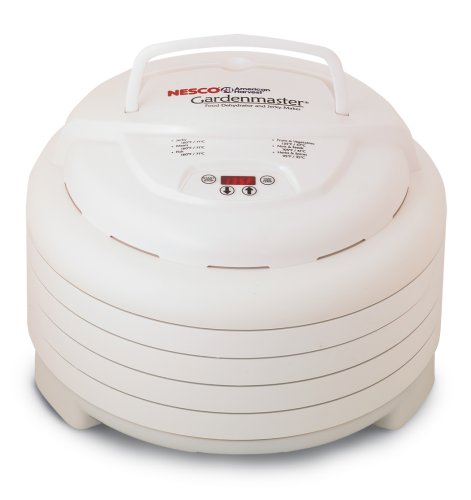
Nesco American Harvest FD-1020 Gardenmaster 1000-Watt Digital Food Dehydrator

Top mounted fan eliminates the worry of liquids dripping into the heater chamber. Expands to a giant 20 trays so you can dry large quantities all at once! 1000 watts of drying power means you can dry more, faster.

These Gardenmaster Accessories Included FREE!
  • No-Spill Fruit Roll Sheet. Perfect for drying semi-liquids: soups, sauces, fruit rolls. Has exclusive "no spill" lips.
  • Clean-A-Screen. Flexible screen, allows easy drying of small items such as herbs, spices, and potpourri.
  • Jerky Spice Packet and Cure - Make your own jerky at home!

    Features and Benefits
  • Digital Timer is Programable for up to 48 Hours of Drying Time
  • 1000 watts of drying power!
  • Patented Converga-Flow®.
  • Adjustable Temperature Control.
  • Includes 52-page recipe and instruction book, 1 solid sheet, 1 mesh sheet, and 1 packet jerky spice to make great tasting beef jerky or venison jerky.
  • 4.5" Fan, 2400-RPM Motor, Adjustable Thermostat, 1,000 Watts.
  • Dries in Hours, not days. Fruit rolls 3-6 hours, Beef Jerky 4 hours, Apples 4-6 hours, Bananas 5-8 hours, Pineapple 4-6 hours.
  • Opaque Vita-Save® Exterior (blocks harmful light).
  • Expandable to 20 trays. No Tray Rotation, 1 Sq. ft. Per Tray


    The world we live in is full of varied cultures & traditions, each one featuring their own unique way of cooking & hence offering a diversified taste. Chinese cooking is one among the most followed ones.

    As a nation, China has several festivals and traditions. Accordingly they have varied dishes for each event. In America, Chinese skills of cooking are looked upon as an art. For centuries together, their delicious delicacies are tickling the taste buds of the Americans.

    Here are a few key features of Chinese cooking:

    1. Chinese cooking is relatively quite easy and quick.

    2. The specialties in Chinese items are categorized as per the nation's culture, festivals & districts.

    3. Some examples are steamed fish, Doufu, dark vinegar rice served with ginger, din sum, etc.

    4. Cooked tea is the most preferred drink with the Chinese cuisine. In china, different varieties of tea are planted, hence, it becomes a part of their daily routine.

    5. The basic ingredients of Chinese food are water and/or oil.

    6. Chinese cooking takes care of everyone's personalized tastes as the food items that can be added to these dishes are quite optional and can be modified as per an individual's choice.

    7. The recipe centers on - simply mixing the right items to match up to one's taste.

    8. The Chinese recipes do not involve lot of spices. They rather focus on the use of flavorings like cloves, aniseed, ginger root and Sichuan peppercorn.

    9. Most oft, the Chinese chefs prefer using more of soy sauce, Shaoxing wine and oyster sauce. These add to the flavor and make the food more presentable.

    10. Cooking the ingredients mainly involves some enlisted cooking techniques. These are shallow frying, stir-frying, roasting, deep frying, steaming, red cooking and stewing.

    11. Stir frying implies frying the food at a very high heat in very little oil. In this case the food is cooked quite quickly as it is necessarily sliced in very small sized pieces.

    12. In case of steaming, Chinese cooking traditionally involves the use of bamboo steamers. The bamboo steamers consist of a stack on their top so as to steam several items simultaneously.

    13. To cook the larger pieces of meat, red cooking is the trick used in Chinese cooking.

    14. Last but not the least, Chinese food features two key ingredients that are noodles and rice. People across the globe identify the Chinese culinary with noodles and rice. They are not only fast to cook but are also quite good to taste.

    From being an indispensable fraction of the restaurant industry worldwide, to the households across the globe, the Chinese cuisine is loved by one and all.

    It is quite simple to cook and with some tips and tricks, all of us can learn this cultural cooking.

    Abhishek is really passionate about Cooking and he has got some great Cooking Secrets. up his sleeves! Download his FREE 88 Pages Ebook, "Cooking Mastery!" from his website http://www.Cooking-Guru.com/770/index.htm. Only limited Free Copies available.

    dehydrator
  • Wednesday, July 8, 2009

    Nesco All-in-One Food Dehydrator Kit, Model# FD50-WHC

    Everything needed to dry fruit, vegetables, jerky and more. 500 Watts power plus patented coverage flow for even drying. No more rotating trays. U.S.A.


    I for one when it involves survival believe that if I must live apart from the civilized world then I must do so in a bit of luxury. As such, I tend to store up on nice to haves like canned shrimp, lobster and crab meat, all of which does not require to be refrigerated. I often ask myself what I would do without my usual nice to have snacks and so I have decided to investigate how to dehydrate sour cream. Unfortunately at this time I do not trust keeping my homemade sour cream powder on the supply shelf but perhaps in the future I will feel much more secure in that respect.

    I have no idea what the normal life expectancy of this product would be and I do understand that it is available commercially although I can be pretty certain it is rather costly. One website that I discovered some of the instant sour cream powder on had a price of $49 dollars for 10 pounds, while another offered a number 10 can for $18.95 so the price does vary. As I mentioned above I have been advised that it should be kept refrigerated, however in its dehydrated form it takes up much less space then it would normally.

    Many people have asked me "What in the world would you use dehydrated sour cream for"? Well it is generally used as a flavoring agent when baking, if you make dips, several tasty sauces and for that extra zest in casseroles. I do not really think it would re-constitute in the same texture that the original was in.

    It is really no major task to dehydrate it as all you really need to do is spread your sour cream out onto a non-stick sheet and place it into the dehydrator on the lowest possible setting until the sour cream has completely dried out. Then you can break it up into small pieces or grind it into a fine powder and place it into glass jars for storage. The jar should be kept in the refrigerator.

    I haven't determined that it would be safe to place it in your food storage at this time. Further research will need to be conducted. What I can attest to is that I will have some sour cream during times of emergencies.

    Copyright @2008 Joseph Parish

    For more information relating to survival visit us at http://www.survival-training.info

    dehydrator

    Nesco¿FD-1018P American Harvest 1000-Watt Gardenmaster Dehydrator and Jerky Maker


    Who can resist an icy, frosty cold beverage on a hot day? There is nothing like a freezing cold, multi-flavored concoction such as a snow cone to bring cheer to your heart and a smile to your face on a sweltering day. So many flavor selections to make, so many varied combinations of syrups from which to choose. Where do you start? How daring do you want to be?

    The basic snow cone is a sweet treat made with tightly packed, shaved ice flavored with one or more vividly colored, sugary syrups, generally fruit-flavored. One of many variations, the stuffed snow cone has a layer of soft-serve vanilla ice cream in the middle. Some snow cones need a spoon for them to be consumed, while others are meant to be held like an ice cream cone.

    The snow cone is a remainder from the Roman Empire (27 BCE to CE 395). Loads of snow were lugged down the mountain tops to the city. Syrup was added to scooped snow to make possibly the worlds first frozen dessert. Enter the snow cone or snow ball.

    Skipping approximately 1,500 years, we arrive at the snow cones next milestone. At that time, hand tools, such as hand-held ice shavers, were designed specifically to produce snow balls. By the late 1800s, numerous manufacturers were turning out ice shavers having the ability to shave a block of ice into soft, fluffy snow. It wasnt until the 1920s that this icy treat became popular in locales such as New Orleans.

    In 1919, at the State Fair of Texas, an enthusiastic crowd was able to buy handmade snow cones from Samuel Bert of Dallas. By 1920, he had invented a snow cone-making machine. He continued selling his snow cones there, plus selling his machines worldwide, until his death in 1984.

    The first known, patented motorized ice block shaver to produce New Orleans-style shaved ice, was, in 1934, created by inventor Ernest Hansen of New Orleans, Louisiana. This machine motivated him to invent a more refined and hygienic version of the already popular Italian ice sold by pushcart vendors in New Orleans. Wife Mary concocted several flavors of fresh syrups to be used in flavoring Hansens finely shaved artificial snow. Snow balls have been a popular dessert in New Orleans ever since.

    Snow balls have gained popularity worldwide, but outside of New Orleans they are sometimes known as snow cones.

    Names and Variations:

    Snow cones produced in the United States are generally produced in the shape of a ball. However, in Puerto Rico, they are called piraqua, as they were formed in the shape of a pyramid. The majority of Puerto Rican snow cone peddlers sell their wares out of their cars.

    Mexicans and those living in the adjoining Texas border area eat raspados (raspas for short). The word raspar means scrape; the name raspado can be translated into English as scraped ice.

    A favorite Hawaiian treat is called shaved ice and i sold in cone-shaped paper cups. The Rainbow, a favorite flavor, is made with three flavors that are usually chosen for their color and aesthetics rather than for the flavor compatibility. (Beauty vs. taste? Is something backwards here?) Hawaiian ice is ordinarily shaved to a finer texture than is found with other snow cones so that the syrup colors are retained longer and more intensely, again striving for an improved presentation. As mentioned at the top of this article, it is not uncommon to find a scoop of vanilla ice cream at the bottom of the paper cup.

    On occasion, a snow cone fan can find a small gum ball at the bottom of the paper cone.

    Sometimes, snow cones are confused with Italian ices or water ices. However, water ice purists insist that snow cones must be flavored after production, at the point of sale, while flavor is added to water ices as the ice itself is being made. Italian ice is a favorite in New York City. Although it is generally sold in Pizzerias or Italian Ice Shops, street vendors throughout the city peddle this sweet treat all over the city.

    Nonetheless, southwest of New York City sits Philadelphia, Pennsylvania, with its specialty, water ice, which is made of combining flavorings (usually fruit juices or coffee and chocolate). A variation on this frozen dessert is gelato, popular across the United States. Gelato layers water ice and frozen yogurt, frozen custard, or soft-serve ice cream, into a parfait.

    Snow cones and water ices should not be confused with one another; snow cones have a harder consistency and are sometimes crunchy, while water ices have a more pronounced smoothness and a wetter consistency.

    There is a vast number of syrup flavorings, which can be combined for some exceptionally unusual mixtures. There are many standard flavors for the timid while, on the other hand, there are flavors that, when put together in one treat, may grow hair on your fingernails.

    Here is a sampling of the myriad flavorings available.

    For the faint of heart:

    • Banana Bubble Gum
    • Blueberry
    • Blue Raspberry
    • Butterscotch
    • Cherry Cola
    • Coconut
    • Grape
    • Guava
    • Lemonade
    • Peanut Butter
    • Peppermint
    • Root Beer
    • Spearmint
    • Strawberry
    • Watermelon

    For those who dare to be different:

    • Amaretto
    • Anisette
    • Cranberry
    • Cream Cheese
    • Crme de Menthe
    • Dill Pickle
    • Egg Custard
    • Leche
    • Mai Tai
    • Maple
    • Orchid
    • Pineapple
    • Pink Champagne
    • Tamarind
    • Vanilla Malt

    Caution! Watch out for the dreaded Brain Freeze

    Terry Kaufman is Chief Editorial Writer for several websites. See more on food and cooking at Niftykitchen.com, entertaining at your home bar, at Niftyhomebar.com, and building your dream garden, at Niftygarden.com.

    2007 Terry Kaufman.

    dehydrator

    Wednesday, July 1, 2009

    Nesco American Harvest FD-75PR 700-Watt Food Dehydrator

    The NESCO Professional Food & Jerky Dehydrator has more power than most dehydrators -- 700 watts -- which means faster drying time. You will have results in hours, not days. The top mounted fan with patented Converga-Flow action pressurizes air downward through the outer ring and horizontally across each individual tray, converging at the center, for fast, even drying. No need to rotate trays. The adjustable thermostat allows you to dry different foods at proper temperatures (95-155 F), providing the flexibility to produce the best drying results. As your needs grow, the Professional Food & Jerky Dehydrator can be expanded up to 12 trays.


    Part of my pantry is used for dry staples. Rice is one that I always keep on hand, and I mean real rice not that instant stuff. I doubt if that has any nutritive value. Wild rice and brown rice have a place on my shelf also. there are a lot of dishes to make with rice. The wild rice I use for hot dishes, soup, or as a side dish to compliment wild game. It takes a bit longer to cook, but well worth the effort.

    One of my grandfather's favorite foods was rice pudding, made with white rice. I recall my grandmother making it quite often. Sometimes she would spice it up and other times leave it plain to top off with some kind of berry sauce. Of course she made it in the wood stove oven. I had not made it for quite awhile until someone brought me something they called rice pudding. Naturally thinking about how my grandmother made it, I complimented that person for being so thoughtful. That was before I tasted it.

    I held my tongue and did not say a word. It turned out that person bought something at the grocery store labeled rice pudding. To my way of thinking it was nothing but pudding from a box with instant rice in it. It was horrible! The words instant, fast, quick and ready in 1-minute do not fit my vocabulary when it comes to food. So I proceeded the very next day to show what rice pudding is.

    I put 1-quart of whole milk in a 2-quart baking dish. I added 1/2-cup of white rice and 1/2-cup of sugar and a dash of salt. Then I turned my oven to 300-degrees, put my baking dish in a pan and added 1-inch of water to the bottom of the pan. I let the rice cook for 1-hour, stirring every 15-minutes. Then I let it bake for another hour and a half undisturbed. Making rice pudding this way creates a smooth textured dish, not the lumpy, almost chewy stuff from the store. I made this for my children as one of the first solid foods they ate.

    I invited my friend over for dessert that day. When I said it was rice pudding and not pudding with rice not a word more was spoken, except to ask for the recipe and a second helping.

    You can find casserole dishes at www.pothaven.com.

    dehydrator