Monday, August 3, 2009

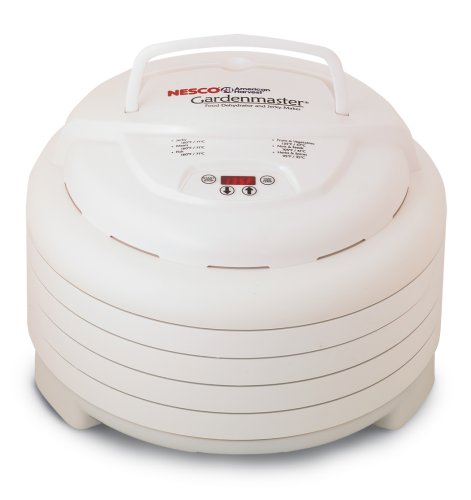
Nesco¿FD-1018P American Harvest 1000-Watt Gardenmaster Dehydrator and Jerky Maker


Keeping fruits fresh for an extended period is not difficult if correct preservation techniques are applied. So before we get started, certain things like pectin powder/ liquid, lemon juice, sugar, ascorbic acid, any artificial sweetener, glass/ plastic freezer containers are needed first.

Over a span of time, fruits tend to darken. To prevent this, it is good to coat them with acidic juice such as juice of lemon, orange or pineapple. There are commercial anti-darkening products available in the market that can also be used. Soaking the fruits in ascorbic acid will also prevent it from darkening over an extended period of time.

If you do not wish to coat or soak fruits in preservatives, you can alternatively use glass or plastic freezer containers. These are special containers that will keep fruits in good quality under freezing conditions.

Fruits like apples, figs, plum, mulberry, cherry, peach, blackberry, and grapes taste great as jams and jellies. So, if you like to have these fruits in the form of jellies, then preserving becomes a lot easier. Just prepare the jelly and preserve it in a glass container.

Drying fruits is also a good way of preserving them. People like to consume some fruits in dried condition. Often fruits like apples, pears, and plums are dried and preserved. A food dehydrator can be used to dry the fruits in the form of slices. These dried fruits are stored in air tight containers.

Pint or quart jars can also be used for preserving fruits. Fruits can be hot packed by adding it in raw condition to hot syrup and then reheating it to boiling point. This should then be packed in the containers along with the syrup.

Canning of fruits is also a good method of preservation. Cut fruit into half and remove the core and stem. This will give you two edible halves. You can even slice the fruit the way you like. The slices are then heat processed and sealed in air tight containers.

Fruits should always be consumed when they are fresh and ripe. However, if you like to consume it after sometime, the above-mentioned tips should help you in preserving your favorite fruits for a longer time.

Alfred Anderson has rich experience in the field of online brand marketing. His interests includes Internet marketing and research on emerging online business trends. True Fruit

dehydrator

Friday, July 17, 2009

Mary Bell's Complete Dehydrator Cookbook

A guide to food dehydrating shows readers how to make preservative-free dried apple rings, candied apricots, beef and fish jerkies, sun-dried tomatoes, corn chips, herb seasonings, dried fruit sugars, and more. 100,000 first printing. Tour.


You don't have to spend hours in the kitchen to have a nice sit-down family meal. Meals do not have to be complicated to be healthy and worthy of family togetherness and you certainly do not have to "eat from a box" to make meals convenient.

Microwave meals and oven-ready foods may be simple and tasty but most of them are filled with different types of preservatives, saturated fats, sodium and sugars. Even those that are low in fat and sodium would have been preserved with chemicals to prolong their shelf lives. While these are convenient to use when you are in a time crunch, they are not the only ways to prepare a quick at-home meal your family will love.

You can buy some products prepackaged. Lettuce, shredded cabbage, carrots and radishes all come in bags. There are varieties of salads you can buy in bags in the produce section of your local grocery store. If you like other vegetables on your salad, it does not take a lot of time to chop and add them. Canned vegetables and fruits to which salt and sugar have not been added are easy ways of giving your family the fruits and vegetables it needs. Frozen vegetables are not unhealthy, either, though if you want the best, you should buy your veggies fresh and steam them rather than boil them.

Healthy breads, cereals and pastas are all quick and simple ways to add complex carbohydrates to your meals. Canned tuna and ground poultry meats make great substitutes for red meats in many different sauces. Turkey burgers that are seasoned well make fast and scrumptious suppers. If you have even half an hour for meal preparation, these can be made along with a salad and some fresh fruit in less time than you have planned.

One-dish meals such as a pot roast with potatoes and carrots are easy to make in the oven but will be even easier and perhaps tastier when made in a crock pot. Put the vegetables in the bottom of your crock pot and place the roast on top. Season, cover and let cook for several hours. Put it together in the morning before leaving to work and when come home in the evening you have a healthy and delicious dinner waiting for you. What could be simpler than that? Well, pot roast is not your only choice and there are other recipes that are just as easy.

Make family meals easy and enjoy the time you have together instead of eating on the run. Easy family meals really can be healthy!

Simon Burke loves to cook delicious and nutritious meals for his family. And luckily for us he also enjoys sharing his cooking experiences and recipes with the rest of us. Another article on easy family meals, click here.

dehydrator

Sunday, July 12, 2009

dehydrator

dehydrator

Hiking light helps you have more fun. You feel less burdened, more invigorated, and closer to nature. To lighten your pack as much as possible, you need to become an expert at choosing light food. You can lighten the weight of the food you carry and maintain great nutrition and taste.

The most important food you carry is water. It's more important than other foods for survival and many bodily functions such as staying cool or warm. And since food is heavy, you need to carry enough without carrying too much. Reading your map and learning from others about water sources before you hike will reduce your water weight. In some areas you need to carry large amounts of water between sources. In other areas, you can drink large amounts when you're at water sources and not carry much in between.

The main thing to remember when you're planning your food is you'll need more than normal. Lots more. If you're hiking full days, you can plan for almost twice your normal calories. But don't fall into the trap of filling in the extra calories with packaged junk food. You don't need empty calories. You need nutritious calories.

For weekend trips, you can get away with less nutritious meals. You might even use the trip as a bit of a diet, within reason. But if you're through hiking on the long trails, you'll quickly burn up your reserves and your body won't function well without good nutrition.

When you're hiking, good nutrition is much the same as it is anytime. You should stay well hydrated, get lots of protein, complex carbohydrates, and good fats. Eat fruits and vegetables, whole grains, seeds, nuts, and fiber. Veggies might be the biggest challenge on long trips, although you can find them in freeze dried form. They won't be as nutritious as fresh, but you'll still benefit from them.

When thru hikers reach main roads and civilization, they're often ready to gorge on all the wrong things like sugar-filled ice cream. It would be better to overload on vegetables that you've been missing.

Fruits are a little easier to pack than vegetables, because you can readily find fruit leather and things like dried apricots, banana chips, and apple chips.

Freeze dried meals are light, but are expensive and not always dense in nutritious calories. Become more of a label reader when you buy any processed food. On nutrition labels for freeze dried food you'll notice the meals are high in sodium, sugar, and fats. Your body can handle some of those negatives since you're burning so many calories, but they're not the highest quality calories. In recent years, there have been improvements to nutrition and taste in freeze dried foods. Experiment before your hikes to see what's healthiest and what you like.

To reduce the weight and bulk of freeze dried meals, always repackage them in lighter bags, and remember to keep the label and cooking instructions.

Many backpackers use energy bars as part of their diet, even substituting them for regular meals so they can hike without stopping. Energy bars are best used short term because they're nutritional value is questionable. This is another time to read the nutrition label. You'll usually find energy bars are high in sugar which translates to empty calories. Energy bars are often expensive and short on taste. Like many other foods, you may find better choices in the health food aisle of your supermarket. But shopping of the health food aisle doesn't mean it's all nutritious. And organic doesn't mean it's always healthy food.

Processed foods always lose some food value. Many processed foods, like instant noodles, are of questionable value anytime. For the first day or two of your hike you can take a lot of fresh food if you plan ahead. With practice, you can locate the foods that give the most nutrition for their weight.

For breakfast, granola and fruit meals work great. Oatmeal is a good starter. Whole grain dry cereals with powdered milk work well. Some hikers like instant puddings to get started.

Throughout the day you can snack on things like nuts or sunflower seeds which are high in calories and protein. Whole grain crackers or pretzels are good choices. I like organic blue corn tortilla chips. Trail mixes are great because the varied content is tasty and you need to sustain energy between meals. There are a wide variety of ingredients you can experiment with at your local supermarket.

Whole grain tortillas are becoming more available. Quick cook whole grain brown rice is easy to find. Dry soup mixes can be found in any store. I mix them with about 2/3 of the water recommended so it's quicker to heat the water and the soup is thicker. Dried soup mixes are a convenient extra meal to carry in case of an emergency.

String cheese is a good snack. Beef and turkey jerky are old favorites. Dried, refried black beans are nutritious and flavorful. Peanut butter is a favorite staple of many lightweight backpackers, and it's becoming available in small, individual packages. Tuna is now offered in small, foil pouches.

A food dehydrator can be a great investment for lightweight backpackers. You can experiment and find foods you really like. You can also package the perfect amounts.

Powdered sports drinks are a convenient way to replace electrolytes, and you can use them to flavor treated water.

Remember to take your vitamin pill. It can't replace a meal, but it supplements your efforts.

Food is a memorable part of any backpacking trip. You can trim the food weight in your backpack, increase your energy, and enjoy your meals and snacks.

About the author: Steve Green of http://www.hikelight.com is an avid hiker who has enjoyed trimming his backpack weight for over 40 years.

dehydrator

Saturday, July 11, 2009

Nesco American Harvest FD-1020 Gardenmaster 1000-Watt Digital Food Dehydrator

Top mounted fan eliminates the worry of liquids dripping into the heater chamber. Expands to a giant 20 trays so you can dry large quantities all at once! 1000 watts of drying power means you can dry more, faster.

These Gardenmaster Accessories Included FREE!
  • No-Spill Fruit Roll Sheet. Perfect for drying semi-liquids: soups, sauces, fruit rolls. Has exclusive "no spill" lips.
  • Clean-A-Screen. Flexible screen, allows easy drying of small items such as herbs, spices, and potpourri.
  • Jerky Spice Packet and Cure - Make your own jerky at home!

    Features and Benefits
  • Digital Timer is Programable for up to 48 Hours of Drying Time
  • 1000 watts of drying power!
  • Patented Converga-Flow®.
  • Adjustable Temperature Control.
  • Includes 52-page recipe and instruction book, 1 solid sheet, 1 mesh sheet, and 1 packet jerky spice to make great tasting beef jerky or venison jerky.
  • 4.5" Fan, 2400-RPM Motor, Adjustable Thermostat, 1,000 Watts.
  • Dries in Hours, not days. Fruit rolls 3-6 hours, Beef Jerky 4 hours, Apples 4-6 hours, Bananas 5-8 hours, Pineapple 4-6 hours.
  • Opaque Vita-Save® Exterior (blocks harmful light).
  • Expandable to 20 trays. No Tray Rotation, 1 Sq. ft. Per Tray


    The world we live in is full of varied cultures & traditions, each one featuring their own unique way of cooking & hence offering a diversified taste. Chinese cooking is one among the most followed ones.

    As a nation, China has several festivals and traditions. Accordingly they have varied dishes for each event. In America, Chinese skills of cooking are looked upon as an art. For centuries together, their delicious delicacies are tickling the taste buds of the Americans.

    Here are a few key features of Chinese cooking:

    1. Chinese cooking is relatively quite easy and quick.

    2. The specialties in Chinese items are categorized as per the nation's culture, festivals & districts.

    3. Some examples are steamed fish, Doufu, dark vinegar rice served with ginger, din sum, etc.

    4. Cooked tea is the most preferred drink with the Chinese cuisine. In china, different varieties of tea are planted, hence, it becomes a part of their daily routine.

    5. The basic ingredients of Chinese food are water and/or oil.

    6. Chinese cooking takes care of everyone's personalized tastes as the food items that can be added to these dishes are quite optional and can be modified as per an individual's choice.

    7. The recipe centers on - simply mixing the right items to match up to one's taste.

    8. The Chinese recipes do not involve lot of spices. They rather focus on the use of flavorings like cloves, aniseed, ginger root and Sichuan peppercorn.

    9. Most oft, the Chinese chefs prefer using more of soy sauce, Shaoxing wine and oyster sauce. These add to the flavor and make the food more presentable.

    10. Cooking the ingredients mainly involves some enlisted cooking techniques. These are shallow frying, stir-frying, roasting, deep frying, steaming, red cooking and stewing.

    11. Stir frying implies frying the food at a very high heat in very little oil. In this case the food is cooked quite quickly as it is necessarily sliced in very small sized pieces.

    12. In case of steaming, Chinese cooking traditionally involves the use of bamboo steamers. The bamboo steamers consist of a stack on their top so as to steam several items simultaneously.

    13. To cook the larger pieces of meat, red cooking is the trick used in Chinese cooking.

    14. Last but not the least, Chinese food features two key ingredients that are noodles and rice. People across the globe identify the Chinese culinary with noodles and rice. They are not only fast to cook but are also quite good to taste.

    From being an indispensable fraction of the restaurant industry worldwide, to the households across the globe, the Chinese cuisine is loved by one and all.

    It is quite simple to cook and with some tips and tricks, all of us can learn this cultural cooking.

    Abhishek is really passionate about Cooking and he has got some great Cooking Secrets. up his sleeves! Download his FREE 88 Pages Ebook, "Cooking Mastery!" from his website http://www.Cooking-Guru.com/770/index.htm. Only limited Free Copies available.

    dehydrator
  • Wednesday, July 8, 2009

    Nesco All-in-One Food Dehydrator Kit, Model# FD50-WHC

    Everything needed to dry fruit, vegetables, jerky and more. 500 Watts power plus patented coverage flow for even drying. No more rotating trays. U.S.A.


    I for one when it involves survival believe that if I must live apart from the civilized world then I must do so in a bit of luxury. As such, I tend to store up on nice to haves like canned shrimp, lobster and crab meat, all of which does not require to be refrigerated. I often ask myself what I would do without my usual nice to have snacks and so I have decided to investigate how to dehydrate sour cream. Unfortunately at this time I do not trust keeping my homemade sour cream powder on the supply shelf but perhaps in the future I will feel much more secure in that respect.

    I have no idea what the normal life expectancy of this product would be and I do understand that it is available commercially although I can be pretty certain it is rather costly. One website that I discovered some of the instant sour cream powder on had a price of $49 dollars for 10 pounds, while another offered a number 10 can for $18.95 so the price does vary. As I mentioned above I have been advised that it should be kept refrigerated, however in its dehydrated form it takes up much less space then it would normally.

    Many people have asked me "What in the world would you use dehydrated sour cream for"? Well it is generally used as a flavoring agent when baking, if you make dips, several tasty sauces and for that extra zest in casseroles. I do not really think it would re-constitute in the same texture that the original was in.

    It is really no major task to dehydrate it as all you really need to do is spread your sour cream out onto a non-stick sheet and place it into the dehydrator on the lowest possible setting until the sour cream has completely dried out. Then you can break it up into small pieces or grind it into a fine powder and place it into glass jars for storage. The jar should be kept in the refrigerator.

    I haven't determined that it would be safe to place it in your food storage at this time. Further research will need to be conducted. What I can attest to is that I will have some sour cream during times of emergencies.

    Copyright @2008 Joseph Parish

    For more information relating to survival visit us at http://www.survival-training.info

    dehydrator

    Nesco¿FD-1018P American Harvest 1000-Watt Gardenmaster Dehydrator and Jerky Maker


    Who can resist an icy, frosty cold beverage on a hot day? There is nothing like a freezing cold, multi-flavored concoction such as a snow cone to bring cheer to your heart and a smile to your face on a sweltering day. So many flavor selections to make, so many varied combinations of syrups from which to choose. Where do you start? How daring do you want to be?

    The basic snow cone is a sweet treat made with tightly packed, shaved ice flavored with one or more vividly colored, sugary syrups, generally fruit-flavored. One of many variations, the stuffed snow cone has a layer of soft-serve vanilla ice cream in the middle. Some snow cones need a spoon for them to be consumed, while others are meant to be held like an ice cream cone.

    The snow cone is a remainder from the Roman Empire (27 BCE to CE 395). Loads of snow were lugged down the mountain tops to the city. Syrup was added to scooped snow to make possibly the worlds first frozen dessert. Enter the snow cone or snow ball.

    Skipping approximately 1,500 years, we arrive at the snow cones next milestone. At that time, hand tools, such as hand-held ice shavers, were designed specifically to produce snow balls. By the late 1800s, numerous manufacturers were turning out ice shavers having the ability to shave a block of ice into soft, fluffy snow. It wasnt until the 1920s that this icy treat became popular in locales such as New Orleans.

    In 1919, at the State Fair of Texas, an enthusiastic crowd was able to buy handmade snow cones from Samuel Bert of Dallas. By 1920, he had invented a snow cone-making machine. He continued selling his snow cones there, plus selling his machines worldwide, until his death in 1984.

    The first known, patented motorized ice block shaver to produce New Orleans-style shaved ice, was, in 1934, created by inventor Ernest Hansen of New Orleans, Louisiana. This machine motivated him to invent a more refined and hygienic version of the already popular Italian ice sold by pushcart vendors in New Orleans. Wife Mary concocted several flavors of fresh syrups to be used in flavoring Hansens finely shaved artificial snow. Snow balls have been a popular dessert in New Orleans ever since.

    Snow balls have gained popularity worldwide, but outside of New Orleans they are sometimes known as snow cones.

    Names and Variations:

    Snow cones produced in the United States are generally produced in the shape of a ball. However, in Puerto Rico, they are called piraqua, as they were formed in the shape of a pyramid. The majority of Puerto Rican snow cone peddlers sell their wares out of their cars.

    Mexicans and those living in the adjoining Texas border area eat raspados (raspas for short). The word raspar means scrape; the name raspado can be translated into English as scraped ice.

    A favorite Hawaiian treat is called shaved ice and i sold in cone-shaped paper cups. The Rainbow, a favorite flavor, is made with three flavors that are usually chosen for their color and aesthetics rather than for the flavor compatibility. (Beauty vs. taste? Is something backwards here?) Hawaiian ice is ordinarily shaved to a finer texture than is found with other snow cones so that the syrup colors are retained longer and more intensely, again striving for an improved presentation. As mentioned at the top of this article, it is not uncommon to find a scoop of vanilla ice cream at the bottom of the paper cup.

    On occasion, a snow cone fan can find a small gum ball at the bottom of the paper cone.

    Sometimes, snow cones are confused with Italian ices or water ices. However, water ice purists insist that snow cones must be flavored after production, at the point of sale, while flavor is added to water ices as the ice itself is being made. Italian ice is a favorite in New York City. Although it is generally sold in Pizzerias or Italian Ice Shops, street vendors throughout the city peddle this sweet treat all over the city.

    Nonetheless, southwest of New York City sits Philadelphia, Pennsylvania, with its specialty, water ice, which is made of combining flavorings (usually fruit juices or coffee and chocolate). A variation on this frozen dessert is gelato, popular across the United States. Gelato layers water ice and frozen yogurt, frozen custard, or soft-serve ice cream, into a parfait.

    Snow cones and water ices should not be confused with one another; snow cones have a harder consistency and are sometimes crunchy, while water ices have a more pronounced smoothness and a wetter consistency.

    There is a vast number of syrup flavorings, which can be combined for some exceptionally unusual mixtures. There are many standard flavors for the timid while, on the other hand, there are flavors that, when put together in one treat, may grow hair on your fingernails.

    Here is a sampling of the myriad flavorings available.

    For the faint of heart:

    • Banana Bubble Gum
    • Blueberry
    • Blue Raspberry
    • Butterscotch
    • Cherry Cola
    • Coconut
    • Grape
    • Guava
    • Lemonade
    • Peanut Butter
    • Peppermint
    • Root Beer
    • Spearmint
    • Strawberry
    • Watermelon

    For those who dare to be different:

    • Amaretto
    • Anisette
    • Cranberry
    • Cream Cheese
    • Crme de Menthe
    • Dill Pickle
    • Egg Custard
    • Leche
    • Mai Tai
    • Maple
    • Orchid
    • Pineapple
    • Pink Champagne
    • Tamarind
    • Vanilla Malt

    Caution! Watch out for the dreaded Brain Freeze

    Terry Kaufman is Chief Editorial Writer for several websites. See more on food and cooking at Niftykitchen.com, entertaining at your home bar, at Niftyhomebar.com, and building your dream garden, at Niftygarden.com.

    2007 Terry Kaufman.

    dehydrator

    Wednesday, July 1, 2009

    Nesco American Harvest FD-75PR 700-Watt Food Dehydrator

    The NESCO Professional Food & Jerky Dehydrator has more power than most dehydrators -- 700 watts -- which means faster drying time. You will have results in hours, not days. The top mounted fan with patented Converga-Flow action pressurizes air downward through the outer ring and horizontally across each individual tray, converging at the center, for fast, even drying. No need to rotate trays. The adjustable thermostat allows you to dry different foods at proper temperatures (95-155 F), providing the flexibility to produce the best drying results. As your needs grow, the Professional Food & Jerky Dehydrator can be expanded up to 12 trays.


    Part of my pantry is used for dry staples. Rice is one that I always keep on hand, and I mean real rice not that instant stuff. I doubt if that has any nutritive value. Wild rice and brown rice have a place on my shelf also. there are a lot of dishes to make with rice. The wild rice I use for hot dishes, soup, or as a side dish to compliment wild game. It takes a bit longer to cook, but well worth the effort.

    One of my grandfather's favorite foods was rice pudding, made with white rice. I recall my grandmother making it quite often. Sometimes she would spice it up and other times leave it plain to top off with some kind of berry sauce. Of course she made it in the wood stove oven. I had not made it for quite awhile until someone brought me something they called rice pudding. Naturally thinking about how my grandmother made it, I complimented that person for being so thoughtful. That was before I tasted it.

    I held my tongue and did not say a word. It turned out that person bought something at the grocery store labeled rice pudding. To my way of thinking it was nothing but pudding from a box with instant rice in it. It was horrible! The words instant, fast, quick and ready in 1-minute do not fit my vocabulary when it comes to food. So I proceeded the very next day to show what rice pudding is.

    I put 1-quart of whole milk in a 2-quart baking dish. I added 1/2-cup of white rice and 1/2-cup of sugar and a dash of salt. Then I turned my oven to 300-degrees, put my baking dish in a pan and added 1-inch of water to the bottom of the pan. I let the rice cook for 1-hour, stirring every 15-minutes. Then I let it bake for another hour and a half undisturbed. Making rice pudding this way creates a smooth textured dish, not the lumpy, almost chewy stuff from the store. I made this for my children as one of the first solid foods they ate.

    I invited my friend over for dessert that day. When I said it was rice pudding and not pudding with rice not a word more was spoken, except to ask for the recipe and a second helping.

    You can find casserole dishes at www.pothaven.com.

    dehydrator

    Saturday, June 27, 2009

    Trail Food: Drying and Cooking Food for Backpacking and Paddling

    PCKT GD WILDRNESS MED & 1STAID


      Many shoppers only seem to have an abstract understanding of the benefits of organic foods and products on the environment and their health. Organic meat, poultry, eggs and dairy products come from animals that are given no antibiotics or growth hormones. Many people believe that genetic engineering is dangerous, unpredictable, and can reduce the nutritional value of food. But the FDA has said that the amount of hormones used in commercial livestock isn't enough to harm humans. As a result to be deemed organic, meat, poultry, eggs and dairy products must come from animals that are given no antibiotics or growth hormones. Typically organic fruits and vegetables, milk, eggs and meat products are produced within a 50-mile radius of their place of their final sale.

      Organic produce refers to vegetables that are grown without the use of chemicals or pesticides. Only naturally occurring fertilizer, like manure can be used to grow organic produce. While it is still better to eat non-organic vegetables than no vegetables at all, consumers are starting see the value in organic products.

      The natural and organic skin care product sector has seen a growth of thirty nine percent over the last year. The product formulations rely entirely on natural or naturally-derived ingredients. These products do not use any artificial preservatives.

      The FDA does not regulate skin care manufacturers, questionable ingredients often make their way into their formulas. Some of these products may claim to be all-natural, while still containing a slew of chemicals and toxins. As a consumer if a skin care product contains an ingredient that you are unsure about, write down it's name and do a little research. If a product claims to be all natural, its ingredients should be easily recognizable as natural components.

      Scrutinize the first several listings in the product to be sure that they are the natural ingredients you are looking for. Dirt, dust, pollutants, and other environmental pollutants enter the body through the skin, providing a more significant gateway to your system, so it is important to be aware of what products contain. In response to a growing demand on the part of consumers, more and more organic foods and products are flooding the market. Even in mainstream supermarkets, certified organic foods and organic skin care products are available.

      Demand for organic production is increasing by at least 40 per cent each year. And while in some cases the price for organic raw materials may be 3 to 4 times more expensive than conventional. If consumer demand increases, prices should continue to drop.

      Francesca Black works in marketing at Organic Items http://www.organic-items.com and Pilates Shop http://www.pilates-shop.net leading portals for organic products and natural excercise.

      dehydrator

      Friday, April 3, 2009

      Nesco American Harvest FD-1010 Gardenmaster Food Dehydrator

      Drying apple slices in just three hours and beef jerky in four, this 1000-watt dehydrator is exceptionally fast, using a big, 4-1/2-inch fan to force air up through the drying trays' outer rings and across each tray. A thermostat adjusts from 95 degrees to 155 degrees for drying different items. Each of the four plastic trays is 13-3/4 inches in diameter and 1/4 inch deepthat's four square feet for drying fruits, vegetables, herbs, or flowers at one time. Additional trays can be ordered separately, and up to 30 trays can be stacked on this unit's metal base at once. A fruit-roll sheet inserts into a tray so that applesauce or other fruit sauces can be dried into healthful snacks, and soups and sauces can be dehydrated for camping trips. Beef-jerky spices and a detailed 64-page recipe and instruction booklet are included. The dehydrator measures 15-1/2 inches in diameter and 10 inches high, cleans easily, and carries a one-year warranty against defects. --Fred Brack


      If you're anything like us, family meals can take too much time. Whether you're working full time, taking care of the kids or simply running errands and enjoying life, finding time to whip up a fresh dinner every night is hard. But if you've been replacing home-cooked meals with too much takeout, you might be putting your health at risk - and your waistline!

      Celebrate 2008 by making a resolution to eat well. With homemade dinners that are healthy, easy and never dull, you'll feel better - and look better, too. To get you started, check out these six no-fail tips from our own kitchens:

      1. Scratch cooking from scratch. Sunday afternoon may be a great time to pore through the cookbook, but for most of us, Tuesday night is not. Instead, try supplementing homemade items with simple, flavorful pre-made sauces and seasonings, so all you have to cook are the basics.
      2. Make your meal plan manageable. If you love to eat gourmet, it's easy to get carried away at the grocery store. Planning out your meals for the week - or at least a couple of days - will help you stay on track when shopping. Otherwise, you could come home with grand plans, expensive ingredients and no time to actually cook!
      3. Shop for versatility. Foods and ingredients with multiple purposes can help streamline your cooking process and make evenings easy. Chicken marinade that serves double-duty as a dipping sauce, bread dipping oils that can just as easily dress a salad and savory sauces that work wonders with both pasta and sandwiches are all ideal additions to your pantry.
      4. Read the labels. All Made In Napa Valley products are all natural, so there's no mile-long ingredient list to sift through. But other products aren't always as simple. When you buy pre-made gourmet items like ravioli and risotto, take a look at the label before you buy. This will let you know which items offer natural, healthy ingredients and which are packed with preservatives, sodium and fat.
      5. Prep in the morning. After a long day, it's hard to come home to a fridge full of unwashed vegetables and packaged meat. To cut down cooking time, try prepping your ingredients in the morning - fill a freezer bag with some easy chicken marinade and some chicken breast, wash and trim vegetables, or simply ensure the kitchen is spic and span. Just 15 minutes in the morning can prevent getting started in the evening from feeling like a chore.
      6. Have a snack! If you come home starving and unable to think, take a moment to have a simple little snack, such as a piece of fresh fruit or some fresh tomatoes drizzled with one of our balsamic vinegar recipes. Not only will you feel better while you cook, but you'll be less likely to overeat at dinner - or worse yet, scratch cooking altogether and head for the nearest drive-thru window.

      With these six simple tips, you can make weeknight dinners fun and easy. Chicken marinades, dipping oils, simmer sauces and more from Made In Napa Valley taste great - and are good for you, too. This year, make your New Year's resolution to eat well - the wine country way!

      Catherine Bergen is a member of the International Association of Culinary Professionals (IACP) and the National Association for the Specialty Food Trade. Catherine was named Woman of the Year in the Specialty Food Business by the North Bay Business Journal in 2007. She also is actively involved in the community and regularly contributes to numerous local charities through time, talents and in-kind donations.

      dehydrator

      Monday, March 30, 2009

      Nesco All-in-One Food Dehydrator Kit, Model# FD50-WHC

      Everything needed to dry fruit, vegetables, jerky and more. 500 Watts power plus patented coverage flow for even drying. No more rotating trays. U.S.A.


      Home cooking network - a pandora box for all the foodies. A never before array of recipes are a rare collection of specialties form all over the world. It can serve all sorts of individual needs that are vegetarian, quick & easy, traditional, etc. Ranging from gourmet to the simpler ones, these recipes can be broadly divided in to 4 heads. These are as follows:

      1. Appetizers

      Unlike the regulars such as bruschetta or deviled eggs, Home Cooking Network offers the individuals an opportunity to try various cuisines. Chinese, Mexican, French..... the list is amazing!

      i. Spicy Appetizers
      For spicy pre meal snacks check out the Mexican & Chinese appetizers.

      ii. Soups
      Soups make great appetizers and attribute to quite a healthy meal. If beef & chicken recipes do not tickle your taste bud being a vegetarian, look out for the vegetable soups such as carrot soup. For playing off the league try your hand with the French onion soup.

      iii. Salads
      Whether appetizers or a meal, salads are just perfect for all of us. And for the lazy ones, these are far more simpler & quicker recipes to opt from. They take almost no time, don't believe me, try potato salad or pasta salad! For some adventure & experience go for the Mexican salad.

      2. The Main Course

      Do you wanna be different this time? Choosing the main course could be rather hard but with Home Cooking Network, the choices are endless.

      i. Beef
      In place of the plain steak, try some corned beef or beef casserole, or the beef stroganoff.

      ii. Chicken
      Recipes enlist things as simple as the grilled chicken to something special like the low carb recipes and the chicken cordon bleu.

      3. Traditional Home Cooking

      This can be defined in many ways as per one's own perception. Home Cooking Network consists of many recipes that can be used as main course, appetizers, desserts or just simple snacks. These recipes are representatives of different cultures like
      i. Polish
      ii. Kosher
      iii. German
      iv. Indian
      v. Mediterranean
      vi. Phillipino, etc.

      4. Desserts

      Desserts are surely delicious end to the meals. Home Cooking Network believes in trying different recipes, that are new, uncommon and easy to cook.

      i. Greek, Mexican and Phillipino desserts form a major chunk of the list.
      ii. Alongside it enlists all time favorites like pies. Among pies, Home Cooking Network contains recipes for key lime, fruit filled and pecan pies.

      5. Vegetarian Special

      Among vegetarian cuisines, Home Cooking Network offers various new & exquisite recipes like:

      i. Pasta dishes
      ii. New recipes for asparagus and sweet potatoes
      iii. Cajun cooking
      iv. Vegetarian meatloaf

      6. Others

      To tickle your taste buds further, Home Cooking Network's recipes include many other categories to serve any purpose you have on mind, that is a festive treat, pleasing a cherished guest or thanking a friend, or simply sharing a relishing moment with the family. These recipes might be time consuming but the time is all the worth. Its rich culinary list includes:

      i. Cajun
      ii. Gumbo
      iii. Sweet breads, and
      iv. Collard greens.

      Abhishek is really passionate about Cooking and he has got some great Cooking Secrets. up his sleeves! Download his FREE 88 Pages Ebook, "Cooking Mastery!" from his website http://www.Cooking-Guru.com/770/index.htm. Only limited Free Copies available.

      dehydrator

      Saturday, March 14, 2009

      Quick Minute Microwave Food Dehydrator

      Product includes 3 non-stick sheets 3 QuickMinute Racks 1 Kitchen Multi-Grater 1 Instruction/Recipe Booklet


      STEP 1

      When you are considering a raw food diet, start with a good colon cleanse which will make the transition to a raw food diet a whole lot easier. This will prepare you both physically and emotionally for the change.

      A colon cleanse could be as simple as taking 2 tablespoons of grounded flaxseeds with your normal daily diet for about 2-4 weeks. You can also choose to go on a strict rigid fast such as The Master Cleanse.

      This will clear out your colon and put you in a "ready" state of mind.

      Explore all the colon cleanse possibilities and choose any one you feel most comfortable applying. This will ease you gently and comfortably onto the next stage of eating majority raw.

      STEP 2

      Most people feel so refreshed and fantastic after a colon cleanse that they are ready to go full blast 100% on a raw food diet right from the off. If this is the case for you, don't spoil the momentum, go for it and charge ahead. Others may use the cleanse to take little tentative steps, working their way up bit by bit. either way, this is the time to take stock and prepare yourself for what lies ahead.

      STEP 3

      Beware of the weird and wonderful gourmet raw food recipes that's being touted in recipe books and other websites. Ignore all these at first and stick to basic, as few as possible ingredients. With so much ingredients and preparation and clean ups you will fall off the wagon in no time.
      Stick to basic, clean, short recipes. Only consider raw gourmet dishes from time to time as a special treat for yourself when you're flush with cash and have plenty time on your hands.

      STEP 4

      Consider purchasing a dehydrator (a piece of equipment which lightly heats the food without destroying the precious enzymes) this will allow for easier transitioning as it changes the texture of the produce, making them crunchy, crispy and interesting, reminiscent of cooked food. You can make crackers, breads and bases for raw fruit cakes.

      STEP 5

      Start each and every morning with a huge smoothie or a large bowl of mixed fruit and nut. Lunch and dinner will be your normal foods keeping it as healthy as possible. Have fruits as snacks in between meals. Do this for two weeks.

      After two weeks of having a raw breakfast, extend it now to having a raw breakfast and a raw lunch. Make lunch a huge smoothies with plenty of greens and/or superfoods. Have a crunchy salad, adding olives or avocado if you need that bit extra. Make this the biggest meal of the day. Have a small healthy cooked meal for dinner. Carry this out for another two weeks.

      After having most of your meals raw for the last two weeks, you are ready to go all the way. (some may prefer to continue having at least one cooked meal per day). Now include your raw dinner making sure it's light and quick to prepare

      Make it easy going raw and get really motivated. Grab some free reports and enjoy some quick and easy recipes, go to http://www.beginnersrawfoodguide.com/begin-raw-form.html

      dehydrator

      Monday, March 9, 2009

      Nesco American Harvest FD-61 Snackmaster Encore Dehydrator and Jerky Maker

      This convenient dehydrator makes great tasting, healthy snacks & jerky! Introducing the Snackmaster?? Encore???. It's Grey top and marbled design features 500 watts of drying power, and generates maximum speed and quality for dehydrating fruits, vegetables, beef jerky, and venison jerky. Helps dry food in hours, not days like ordinary food dehydrators. The top mounted fan eliminates the worry of liquids dripping into the the heating chamber!You can make delicious beef jerky, turkey jerky, fish jerky, trail mix, homemade yogurt, apple snacks, banana chips, dried soup mixes, dried tomatoes, watermelon, cantaloupe, honeydew, mangoes, papaya and other dried fruits at a fraction of the cost. Make dried herbs and spices; also make potpourri and dried flowers for any occasion.


      Drying or dehydrating vegetables is one of the oldest known methods of food preservation. The really great thing about it is that you can do it at home with equipment you have on hand.

      You should pick your produce at it's peak and work as quickly as you can to preserve its colour and taste.

      Prepare your vegetables as if you were going to serve them. Wash them well, trim, cut, chop, slice, whatever. Thickness will play an important role in how long your veggies take to dehydrate, so bear that in mind when preparing.

      Next you must blanch the vegetables. This will preserve the colour and flavour of the vegetable. Most vegetables have an enzyme that, left active, is what makes it spoil so quickly. Blanching the vegetables stops the enzyme action.

      Follow available guidelines for blanching (available at www.no-dig-vegetablegarden.com). Once blanched, chilled and drained, you are ready to dry or dehydrate your vegetables for long
      term storage.

      The Rules

      Of course, there are heaps of rules...but let's start here.

      There are three methods used to dry or dehydrate vegetables.
      Sun dried, commercial dehydrator or oven.

      Sun drying is the least reliable method for areas with variable temperatures. Unless you live in a climate that is a consistent 90F with low humidity for a guaranteed 3 days in a row, you risk your produce.

      Once the drying starts, it cannot stop until finished. So DO NOT let your vegetables cool again until they're done. Having said that, lots of places do have that sort of weather...but more places don't, so sun drying is a bit of a gamble for most.

      You can purchase food dehydraters in a range of sizes, but unless you are going to be doing an awful lot of this, it's probably better to wait or buy one with a group of friends to pass around. They aren't very expensive, but they are usually used for quite short periods of time.

      So, we're left with the oven. It's almost certain that you have one, so nothing new to buy. It is time consuming and a little fiddly, but it's such a great result!

      Oven drying

      A home oven will only dry small quantities at a time (up to six pounds of produce, depending on the number of racks you have) so don't be preparing bushells of veggies at a time!

      Set the oven at the lowest temperature and preheat to 140F (60C). If you are uncertain of the temperature, put a separate oven thermometer on a rack you can see. Check your temperature
      every half hour or so.

      Lay out your vegetables on stainless steel screen mesh or wooden
      frames covered in cheescloth. Do NOT use cookie sheets as the
      air must circulate around the food. Having the food sit next to
      metal sheets may also transfer a metalic taste. Using other
      types of metal materials may react with the food so please don't.

      Load up the veggies. Doing trays of items similar in size will keep the drying even. For instance, doing pumpkin, carrot and
      potato might be a good mix. Try not to mix strong flavoured items as the flavour may transfer from one vegetable to another.

      Keep the oven door open about 3 inches or so during drying. It is vital that the temperature is maintained at 140F (60C) and that the moist air can escape. Move the trays around frequently to ensure even drying. No oven has even heat throughout.

      Keep a close eye on your drying vegetables. Don't let them scorch and keep them moving.

      Depending on the vegetable you are drying it will take between
      4 and 12 hours to dry. Once they're done, the vegetable pieces
      will be hard and should shatter if hit with an instrument.

      Store in a water tight container. To use, just add them to soups and sauces as they are, or reconstitute (cover them in a container with water 2:1 ratio) for approximately 2 hours before using.

      Judy Williams (http://www.no-dig-vegetablegarden.com) splits her time between being an executive and an earth mother goddess.

      No Dig Vegetable Gardens represents a clean, green way to grow your own food. The site covers all aspects of growing, cooking and preserving your harvest.

      dehydrator

      Thursday, March 5, 2009

      Nesco American Harvest FD-1020 Gardenmaster 1000-Watt Digital Food Dehydrator

      Top mounted fan eliminates the worry of liquids dripping into the heater chamber. Expands to a giant 20 trays so you can dry large quantities all at once! 1000 watts of drying power means you can dry more, faster.

      These Gardenmaster Accessories Included FREE!
    • No-Spill Fruit Roll Sheet. Perfect for drying semi-liquids: soups, sauces, fruit rolls. Has exclusive "no spill" lips.
    • Clean-A-Screen. Flexible screen, allows easy drying of small items such as herbs, spices, and potpourri.
    • Jerky Spice Packet and Cure - Make your own jerky at home!

      Features and Benefits
    • Digital Timer is Programable for up to 48 Hours of Drying Time
    • 1000 watts of drying power!
    • Patented Converga-Flow®.
    • Adjustable Temperature Control.
    • Includes 52-page recipe and instruction book, 1 solid sheet, 1 mesh sheet, and 1 packet jerky spice to make great tasting beef jerky or venison jerky.
    • 4.5" Fan, 2400-RPM Motor, Adjustable Thermostat, 1,000 Watts.
    • Dries in Hours, not days. Fruit rolls 3-6 hours, Beef Jerky 4 hours, Apples 4-6 hours, Bananas 5-8 hours, Pineapple 4-6 hours.
    • Opaque Vita-Save® Exterior (blocks harmful light).
    • Expandable to 20 trays. No Tray Rotation, 1 Sq. ft. Per Tray


      Cube steak gets the Italian treatment in this recipe that features beef, tomatoes and fresh zucchini.

      2 pounds beef cube steak
      1/4 cup all-purpose flour
      1 teaspoon salt
      1/4 teaspoon pepper
      2 tablespoons olive oil
      1 ( 14.5 oz.) can diced tomatoes
      1 ( 15 oz.) can tomato sauce
      1 large onion, thinly sliced
      1 teaspoon Italian seasoning
      5 small zucchini, cut into 1/2 inch slices

      Directions

      Place the cube steak, flour, salt, and pepper in a large plastic bag you can reseal. Seal and shake to coat.

      In a large skillet, heat the olive oil over medium heat; brown the cube steak. Reduce heat to low, and mix in the tomatoes, tomato sauce, onion, and Italian seasoning. Cover and simmer at least 1 hour, stirring once.

      Place the zucchini in the skillet, and coat with the tomato sauce. Continue to simmer uncovered 10 minutes or until zucchini is tender.

      => Beef Brisket Recipes: Oven BBQ Beef Brisket

      This is a very simple recipe for barbecue beef brisket that features cola, onion soup mix and chili sauce.

      2 1/2 pounds beef brisket
      1 ( 12 oz.) can or bottle cola carbonated beverage
      1 ( 1 oz.) package dry onion soup mix
      1 ( 12 oz.) can or bottle chile sauce

      Directions

      Preheat oven to 325 degrees.

      In a roasting pan, place brisket fat side up. In a bowl, combine cola beverage, onion soup mix, and chile sauce. Pour chile sauce mixture over brisket.

      Cover and bake for 3 to 4 hours. Uncover the brisket during the last hour of cooking.

      => Beef Jerky Recipes: Savory Beef Jerky

      Save money and make your own beef jerky at home. Marinate strips of fresh beef in a spicy sauce then dehydrate to your taste.

      2 pounds beef round steak, cut into thin strips
      1/4 cup soy sauce
      2 tablespoons Worcestershire sauce
      2 tablespoons liquid smoke
      2 tablespoons brown sugar
      2 teaspoons salt
      1 teaspoon ground black pepper
      1 teaspoon meat tenderizer
      1 teaspoon garlic powder
      1 teaspoon onion powder
      1 teaspoon paprika

      Directions

      Place beef strips in the bottom of a large bowl. Pour soy sauce, Worcestershire sauce, liquid smoke, brown sugar, salt, pepper, meat tenderizer, garlic powder, onion powder, and paprika over beef. Mix well to assure all the meat is evenly coated. Cover and marinate in the refrigerator for 8 hours or overnight.

      Remove beef from bowl and place between two pieces of plastic wrap. Pound beef to 1/8-inch thickness.

      Arrange the beef strips on the tray of a dehydrator and dry at your dehydrator's highest setting until done to your liking - at least 4 hours. Store in an airtight container or resealable bags.

      Delicious Recipes for your busy lifestyle - make awesome meals! http://www.best-free-cooking-recipes.com

      dehydrator
    • Sunday, March 1, 2009

      Mary Bell's Complete Dehydrator Cookbook

      A guide to food dehydrating shows readers how to make preservative-free dried apple rings, candied apricots, beef and fish jerkies, sun-dried tomatoes, corn chips, herb seasonings, dried fruit sugars, and more. 100,000 first printing. Tour.


      The Bradley Smoker is a fully featured smoker. This smoker truly delivers and does it all really well. It can hot or cold smoke, provide the ability for slow, low-temperature roasting. You can smoke your favorite foods up to 8 unsupervised hours. It does this with an automatic smoke generator that is unique only to The Bradley Smoker. Simply load the feeder with bisquettes and this automatic smoker will start loading bisquettes, one about every 20 minutes, then it will add a new one and extinguish the old one by pushing it into a pot of water. It will continue to cook or smoke as long as you keep the feeder loaded. This process works without flaw due to the quality engineering from the folks at The Bradley Smoker Company.

      Bradley Smoker Review Features.

      This quality smoker has a fully insulated steel exterior that is powder coated and not painted. This means that it will not rust or fade and the color will not peel off providing years of service. The interior of the insulated body is aluminum which makes it immune to oxidation which causes rust and corrosion. It comes with four nickel-plated cooking racks that are a spacious 11 inches by 15 inches that will never rust and are backed by a lifetime guarantee. Ever seen a rusted nickel? The Bradley Smoker has 572 square inches of cooking area that makes room to smoke large quantities of food. It has a cooking range of 140 deg F. to a maximum of 320 degrees. The temperatures are controlled by an infinite head slide switch, which allows you to maintain any desired cooking temperature that can be monitored by the built in temp. gauge.

      The Bradley Smoker uses bisquettes that come all the favorite woods and flavors like hickory, mesquite, and apple wood. This provides the ability to have a large selection of smoke flavors. These bisquettes usually come in packs of 48 that coast about $15. On pack provides about 15 hours of total cook time.

      This smoker is as versatile as it is reliable. Some key notes to highlight in this Bradley Smoker review is that this smoker cold smokes and also can be used as a food dehydrator, which works very well on meats, vegetables, and fruits. This smoker can easily make some very tasty beef jerky. The cold smoke feature means you can smoke your favorite cheeses. The Bradley Smoker not only provides years of quality service but save you a bundle of money as well.

      Find out more. Bradley Automatic Smoker prices and customer reviews

      dehydrator

      Tuesday, February 24, 2009

      Nesco American Harvest 5-Tray FD-35 425-Watt Snackmaster Dehydrator

      This unit features Nesco/American Harvest's innovative Top Mounted Powerhead that dries food quickly and evenly with superior results. Detaches to make dehydrator dishwasher safe for easy clean up. Fan-Flow Technology means faster, more even drying with no tray rotation necessary. Perfect for the beginner.


      When you think Hawaii, you may think of tropical. And when you think tropical, you think of pineapple. But that is just one of the many tastes associated with the Pacific Island state. Hawaii is really a melting pot of a state and a melting pot of cultures; much of their food has a blend of flavors.

      When it comes to a beef jerky recipe with a Hawaiian flair, it's no wonder then that there are a variety of flavors that will create a luau inside anyone's mouth!

      Below is a recipe for Hawaiian beef jerky. This recipe, as mentioned above contains several different flavor bursts. There is some ginger for spice. Some brown sugar for sweetness. Some pepper and Cayenne pepper for a little fire. Some soy sauce for saltiness. And we can't forget that pineapple.

      Ingredients:

      1 lb lean meat, thinly sliced

      1 tsp salt

      1 tsp ground ginger

      1 tbsp brown sugar

      1/4 tsp pepper

      1/8 tsp cayenne pepper

      1 crushed garlic clove

      1/4 c pineapple juice

      1/4 c soy sauce

      Directions:

      1. Slice meat in thin strips.

      2. In a bowl, combine all ingredients of marinade and mix well.

      3. Place meat 3-4 layers deep in a container, spooning sauce mixture over each layer.

      4. Cover tightly and marinate 6-12 hours in the refrigerator, stirring occasionally.

      5. Layout on trays, 24 to 36 hours in dehydrator (or follow directions for oven).

      Now all you need is a grass skirt and some coconut milk!

      REVIEW: Not sure if you can make your own?

      Analei V. of Salem always wanted to go to Hawaii. At least she got a taste of Hawaiian beef jerky when she tried a piece of her friend's Holston Mountain Hawaiian Beef Jerky. The website said that the jerky is sweeter than its other flavors. Analei agreed saying, "There was a real hint of pineapple, which was an interesting combination for beef. I am so used to pineapple being on ham. This was a very unique jerky. I didn't even know you could have fruity jerky! The piece of jerky was huge, too. I am used to thin sticks, but this was an enormous piece. A little hard to chew." The Holston Mountain Hawaiian Jerky is available on their website in three sizes from $8-$21.

      If you found this information on hawaiian beef jerky useful, you'll want to read this article about beef jerky seasoning salt.

      dehydrator

      Monday, February 16, 2009

      Trail Food: Drying and Cooking Food for Backpacking and Paddling

      PCKT GD WILDRNESS MED & 1STAID


        Brie Cheese is quite unusual and it comes from France where it got its namesake. The French still make Brie Cheese the same way today as they did in the 18th century. Both the commoners and the royalty of that era enjoyed the taste of Brie Cheese. It was always in demand for the ceremonies to offer tribute to the Royals of France.

        Outside of France Brie Cheese is make in larger factories where the process is significantly industrialized and sped up. While the try hard to get the very same taste many cheese coniseurs claim you can definitely tell the difference in Brie Cheese that is made in France and that which is made in other places.

        To make Brie Cheese, the curds are processed after they are firm. They are injected with a vaccination called a mold infusion. This mold will grow over a couple of weeks and this is where the taste of the Brie Cheese starts to change. The mold grows on the outside of the cheese and preserves the delicious taste inside of it. The white exterior of Brie Cheese has made it quite famous in many parts of the world.

        Brie Cheese is commonly sold in one or two kilogram wheels. Some retailers will sell it in smaller wedges as a courteously to customers. There are several varieties of Brie Cheese including plain, herb, and others with combinations of milk products.

        It is made from cow's milk but many people are hesitant to try it because of the grayish color it has. Brie Cheese has a very soft and smooth texture to it. It has a rind on it that doesn't taste like anything. It is actually a white mold that you can eat without getting sick but since it has no flavor many people pass it up.

        Many people say Brie Cheese tastes very similar to wild mushrooms. For the best taste Brie Cheese should be allowed to sit at room temperature for an hour before serving. It is often served with berries, nuts, salads, and on hamburgers.

        If you found this information on Brie Cheese useful, you'll also want to read about Goat Cheese

        dehydrator

        Wednesday, February 4, 2009

        Trail Food: Drying and Cooking Food for Backpacking and Paddling

        PCKT GD WILDRNESS MED & 1STAID


          Drying or dehydrating vegetables is one of the oldest known methods of food preservation. The really great thing about it is that you can do it at home with equipment you have on hand.

          You should pick your produce at it's peak and work as quickly as you can to preserve its colour and taste.

          Prepare your vegetables as if you were going to serve them. Wash them well, trim, cut, chop, slice, whatever. Thickness will play an important role in how long your veggies take to dehydrate, so bear that in mind when preparing.

          Next you must blanch the vegetables. This will preserve the colour and flavour of the vegetable. Most vegetables have an enzyme that, left active, is what makes it spoil so quickly. Blanching the vegetables stops the enzyme action.

          Follow available guidelines for blanching (available at www.no-dig-vegetablegarden.com). Once blanched, chilled and drained, you are ready to dry or dehydrate your vegetables for long
          term storage.

          The Rules

          Of course, there are heaps of rules...but let's start here.

          There are three methods used to dry or dehydrate vegetables.
          Sun dried, commercial dehydrator or oven.

          Sun drying is the least reliable method for areas with variable temperatures. Unless you live in a climate that is a consistent 90F with low humidity for a guaranteed 3 days in a row, you risk your produce.

          Once the drying starts, it cannot stop until finished. So DO NOT let your vegetables cool again until they're done. Having said that, lots of places do have that sort of weather...but more places don't, so sun drying is a bit of a gamble for most.

          You can purchase food dehydraters in a range of sizes, but unless you are going to be doing an awful lot of this, it's probably better to wait or buy one with a group of friends to pass around. They aren't very expensive, but they are usually used for quite short periods of time.

          So, we're left with the oven. It's almost certain that you have one, so nothing new to buy. It is time consuming and a little fiddly, but it's such a great result!

          Oven drying

          A home oven will only dry small quantities at a time (up to six pounds of produce, depending on the number of racks you have) so don't be preparing bushells of veggies at a time!

          Set the oven at the lowest temperature and preheat to 140F (60C). If you are uncertain of the temperature, put a separate oven thermometer on a rack you can see. Check your temperature
          every half hour or so.

          Lay out your vegetables on stainless steel screen mesh or wooden
          frames covered in cheescloth. Do NOT use cookie sheets as the
          air must circulate around the food. Having the food sit next to
          metal sheets may also transfer a metalic taste. Using other
          types of metal materials may react with the food so please don't.

          Load up the veggies. Doing trays of items similar in size will keep the drying even. For instance, doing pumpkin, carrot and
          potato might be a good mix. Try not to mix strong flavoured items as the flavour may transfer from one vegetable to another.

          Keep the oven door open about 3 inches or so during drying. It is vital that the temperature is maintained at 140F (60C) and that the moist air can escape. Move the trays around frequently to ensure even drying. No oven has even heat throughout.

          Keep a close eye on your drying vegetables. Don't let them scorch and keep them moving.

          Depending on the vegetable you are drying it will take between
          4 and 12 hours to dry. Once they're done, the vegetable pieces
          will be hard and should shatter if hit with an instrument.

          Store in a water tight container. To use, just add them to soups and sauces as they are, or reconstitute (cover them in a container with water 2:1 ratio) for approximately 2 hours before using.

          Judy Williams (http://www.no-dig-vegetablegarden.com) splits her time between being an executive and an earth mother goddess.

          No Dig Vegetable Gardens represents a clean, green way to grow your own food. The site covers all aspects of growing, cooking and preserving your harvest.

          dehydrator

          Grilling Tools For the Backyard BBQ Master

          If you want to make a name for yourself as the local neighborhood grill master, you need to have the right tools and accessories. These grilling tools are a must have for backyard chefs everywhere:

          You'll need a nice set of utensils that are well suited for grilling. That means they shouldn't be made of material that will get hot in your hands. They should be big enough that you can reach the back of the grill with them safely, but no bigger. Many bbq tools are made so big that they become difficult to handle. Many a time I've seen a newbie griller use extra long tongs to grab something off the grill only to lose control and drop it on the ground. What a waste!

          Another note about barbeque utensil sets: they usually come with a giant fork. Take the fork and throw it right in the garbage. No self-respecting grill master uses a fork to poke his meat. It lets all the delicious juices pour out!

          Now what other grilling tools do we need? Well, you need to keep your grill clean so that means you'll need a wire brush. You can get these for as little as $5.99 but I recommend going with the $14.99 models. The cheaper ones fall apart and leave little pieces of their wire all over your grill (and in your food if you're not careful). Better to spend the extra couple bucks and avoid the aggravation.

          Now let's think about safety. You're going to be working over an open fire so you want to be as careful as possible. The grill will be piping hot and so will dishes, utensils, etc. At the least you should have some sturdy oven mitts handy. But what I recommend is getting a pair of "Ove Gloves". You can get them for around $12 to $15 and they're so worth it. They're comfortable to wear and can resist temperatures up to 480 degrees! Grab yourself a pair and you'll be glad you did.

          There's just one more grilling tool you need to add to your arsenal: a small spray bottle. No matter how careful you are you're bound to have a flame up from time to time. You'll need to act fast or your whole meal will go up in smoke. If you keep a small spray bottle filled with water handy you can quickly spray down flames before they get out of control.

          These are the grilling tools that will make your barbeque experience a joy. You can pick up more grilling tips and some delicious recipes at http://how-to-barbeque.com

          dehydrator
          dehydrator
          dehydrator
          dehydrator
          dehydrator
          dehydrator
          dehydrator
          dehydrator
          dehydrator
          dehydrator